


Another week, another war.
It’s understandable—but mistaken—to think of the events of the past few days as normal. Venezuala, Yemen, Somalia, Nigeria, Syria, Iraq. War may be policy by another means. But for this administration policy is war. Whether it comes to trade, domestic policy, or foreign policy. But the shifting rationales that we’ve heard this week regarding Iran are hardly an innovation in U.S. politics. One may fear it’s business as usual.
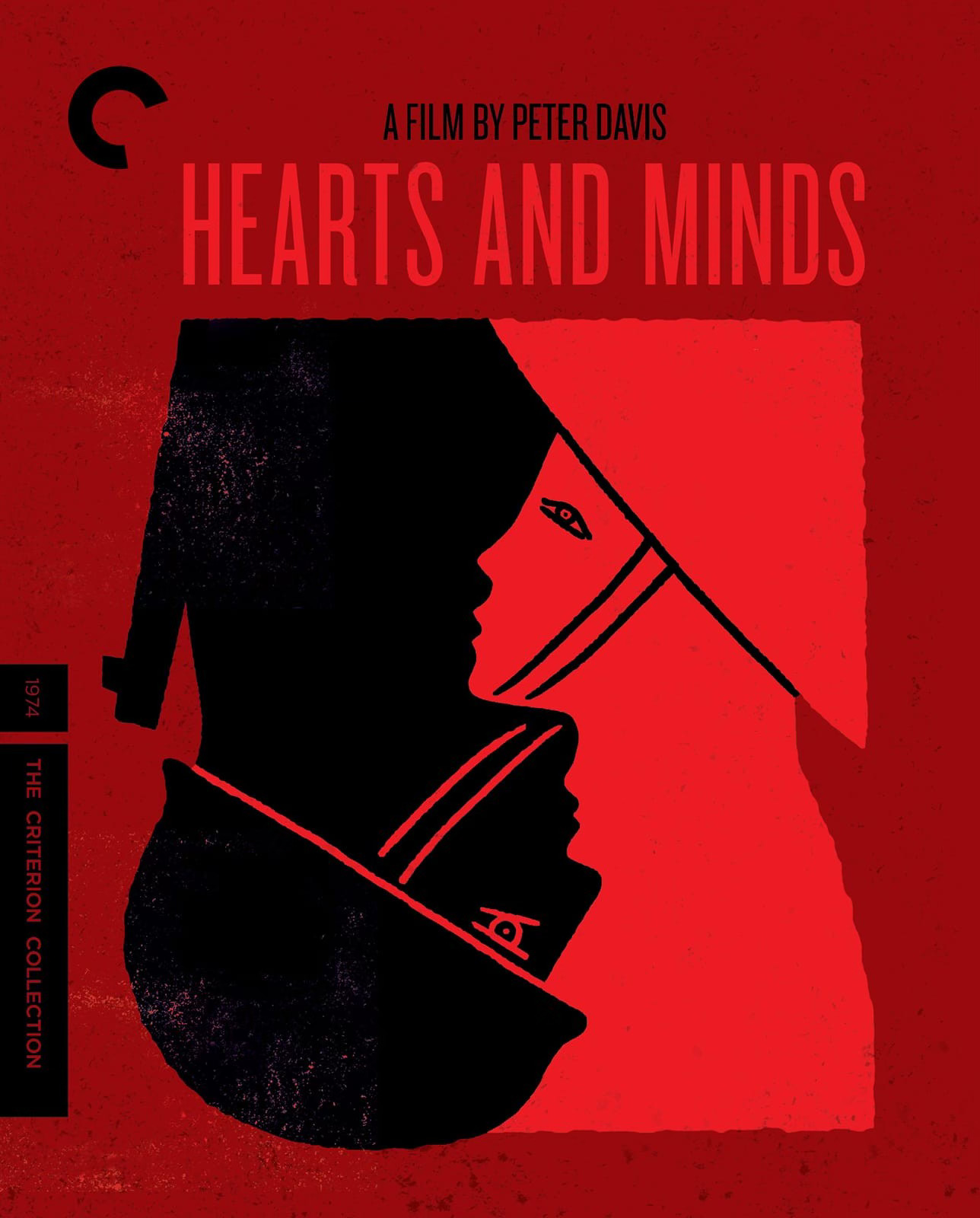
A few weeks back, I returned to Hearts and Minds, the Oscar-winning 1974 documentary about the Vietnam War—an artifact from a shattered America still struggling to confront its tragic and deadly mistake. Seems like most of us can open our front doors and watch that play out in realtime right now. But, it’s hard to imagine a better film to make sense of this moment.
The film is stark in its portrayal of the lies that made the war in Vietnam possible. Not just those told by the Pentagon and White House, but the lies Americans tell ourselves. The director, Peter Davis, 89, a longtime filmmaker and journalist for CBS, The Nation, and others, lives between Cambridge, Massachusetts, and Maine these days. I was curious to hear how he felt about this moment and—even though we caught up before the war with Iran kicked off—found his perspective as sharp as his masterpiece film.
…oh, and yes, Attention Edifice is new. If you like this sort of thing, please subscribe.
An interview with Peter Davis
[This interview has been edited for length and clarity.]
Johnny Dwyer
It’s been 51 years since Hearts and Minds was released. [Watching it recently] I was really struck by the moral clarity of the film. And I’d obviously grown up seeing a lot of different documentaries about Vietnam, but this was different because it was made during the war, and you didn’t have the full benefit of hindsight. Tell me a little bit about how you arrived at your perspective on Vietnam for the film?
Peter Davis
I made a film for CBS News called “The Selling of the Pentagon.” And that film is absolutely what led to Hearts and Minds. “The Selling of the Pentagon” was [about] how the Pentagon sells war, really.
As a result of that, an old friend of mine, the filmmaker Bob Rafelson, put me together with his partner, Bert Schneider. This is while I was working for CBS News. And I went out to California and had a meeting with him. At first, I was still at this time hoping not to go to Vietnam. In my little crew of four, I was the only one who was married, the only one who had children. The others [did not] including Dick Pearce, Tom Cohen, and Brennon Jones—great people.
I was thinking possibly that the trial of Dan Ellsberg and his partner, who helped him, would be a kind of armature around which I could wind the war. I mean, this was stupid, but that’s what I thought. That I would interview the witnesses for the prosecution and for the defense who came to California to testify. Well, neither the defense nor the prosecution would let any of their witnesses talk to me. So this bad luck turned out to be good luck. I realized that I was going to have to go.
I flew to Vietnam, and Brennon Jones, who I worked with at CBS News, oddly enough, drove me out to a little village outside Saigon. And, Jesus, I couldn’t believe what I saw. I saw a place where a bomb had struck and put a huge hole in the ground. It was maybe twenty feet across. The first thing I saw was a kid’s bicycle wrapped around a little tree. Then I saw a piece of crockery and a bowl that had been used for cooking, and it was splattered. Only then did I see an arm, a leg, a head, a torso, another arm, and another leg—of a child’s doll. That’s all it was, a child’s doll. And I knew how this would be treated at the network, any network. The camera person would pull back slowly and show each of these things. It’s what the networks call dead air. And they hate dead air. Then you come to the correspondent. I was terrified and angry at the same time.
I didn’t want to do filming of the war. I wanted to show the effects of the war. I decided that each part of the film—and the film wasn’t even shot yet—much less. Each part of the film would address itself to three questions. Why did we go to Vietnam? What was it that we did there? And what did the doing in turn do to us? Now, those three questions are not answered. But I wanted each part of the film to kind of address them. Now, I didn’t come to that conclusion that first day in Vietnam. The only thing I came to that first day in Vietnam was this film was going to be dead air — what the networks called dead air.
Why did we go to Vietnam? What was it that we did there? And what did the doing in turn do to us?
- Peter Davis
JD
Early in the film, there is a moment where you’re interviewing two sisters and they’re recounting a bombing that killed their third sister. It’s marked by a substantial amount of dead air—a notable pause.
Davis
That [was] in line with this thinking that, you know, this is not what we do in network television. But I’m going to do it here because it’s here as a distinct narrative purpose.
JD
This film was made coming out of like the late 1960s and the 1970s where there was a lot of upheaval. A lot of violence. There was a rejection of the status quo, whether it was a civil rights movement or the anti-war movement. Do you see any parallels today?
Davis
I do because Trump is a foe of the civil rights movement. I mean, look: anyone who can portray a former president and his wife as an ape is not somebody who’s in favor of the civil rights movement, right? I mean that portrayal of President Obama and Michelle Obama. Of all the horrible things this scoundrel has said and done. This is just got to be about the lowest.
When [Johnson] was president, I didn’t like him because of the way he escalated the Vietnam War, which I thought Kennedy probably wouldn’t have done—but I have no idea what Kennedy would have done. I do know that when Kennedy was assassinated, there were only 16,000 American troops in Vietnam, and by the time it hit its peak, there were 500,000. Johnson also did something very courageous. Johnson knew that because of the Civil Rights Act he was turning the South over to the Republicans. And it was a courageous thing that Johnson did and I admire him for that.
JD
Another thing that really struck me [in the film] was your ability to show Americans professing these firmly held beliefs, whether it’s about democracy, freedom from tyranny, or notions of justice. But then, air that, with evidence of American actions that are in direct opposition to those ideas.
Davis
Not one single person interviewed in the film had not been, at one time, in favor of the Vietnam War—including Ellsberg. Clark Clifford is a very good example. [In the film] I identify Clifford in different ways. I think the first time we show Clifford, it’s as an adviser to Harry Truman. At the end, it was as the Secretary of Defense, and he said he had no hesitation saying that he had a 180-degree reversal of his earlier position on the Vietnam War.
Well, that was something that was very impactful. In that, the government had undergone a change of heart— important parts of the government—as to the mistake of Vietnam.
JD
Looking at today, do you think that there is the capacity for any part of the government to have a similar change of heart?
Davis
It’s interesting. I don’t know whether Trump criticized the Vietnam War. But he definitely criticized the war in Iraq. I mean, here we are with a guy who wants the Nobel Prize for peace, yet he’s already made war in Iran one time, and he seems to be getting ready to do it again. It’s terrible. [He’s] kidnapped the leader of Venezuela and is killing people [in the Caribbean], who he has no idea whether they are transporting drugs or not. Trump has killed those people without due process.
JD
It’s likely an illegal policy. Yet, it has the initiative. It has the momentum, and there doesn’t seem to be anyone with the power or the will to stop it politically.
Davis
I also want to tell you something about my interview with [General] Westmoreland. Late in the interview, I had really asked all the questions. I was going to ask. I didn’t have any more, so I said to the crew, “Do any of you have any anything you want to ask General Westmoreland?” And the sound man, who’s also the associate producer, Tom Cohen. He says, “Look, general, you’ve served all over in World War II and [Vietnam] is there anything that makes you differentiate between people?” And he said, “well, the Oriental, doesn’t really care that much about human life.” At that point, we ran out of film. And I knew that he was going change his mind when we reloaded it. And he said it again. A second time. And at that point, Tom Cohen, the sound man, he ran out of sound. So he had to reload. I don’t know, this kind of thing couldn’t happen now, but it did happen. So, for the third time. He said the same thing, “the Oriental doesn’t put much value on human life.” I couldn’t believe that he said it three times.
JD
It drives home an important lesson of the film that I think is really lost to history is that racism against the Vietnamese was really central to what was going on.
Davis
And he complained afterwards that it was, it was a remark that was taken out of context. I wondered afterwards what context would he like to have been in?
JD
An effect of watching [Hearts and Minds] right now, a lot of what is said, particularly by the Vietnamese, comes across as almost prophetic. There’s a Buddhist monk in the film who says something like, “ultimately Americans will see the light. If not, they will defeat themselves.” Did you have a sense of the impact of those sorts of words?
Davis
No. I’m not quite sure how to answer it accurately. I felt that he was making a correct point.


JD
I was looking at the historic [Oscar] winners of this category of the best documentary. Last year’s winner, which was a film about the West Bank.
Davis
Oh, I love that. No Other Land. I loved that film. Of course, I voted for it. That’s such a scandal—it’s a murderous scandal, the way they were behaving on the West Bank.
JD
Do you feel like feature documentaries have lost some of their cultural power?
Davis
It’s the opposite. Just the opposite. I think when Hearts and Minds came out. Documentaries and Hearts and Minds did very poorly in theaters. It didn’t make back anything. But it seems to have stayed.